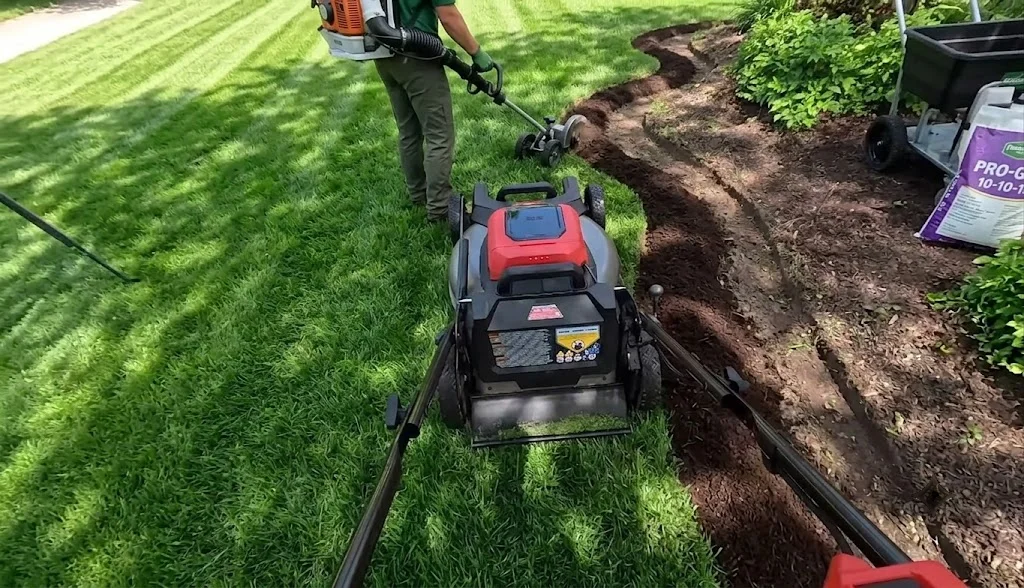
St. Augustine Grass Care South Carolina
The Shade Answer. Mow It Tall.
When Bermuda thins under the oaks and Centipede sulks in the shade, St. Augustine is the South Carolina answer. It asks for a 3–4 inch mowing height, iron rather than nitrogen when it yellows, and watchfulness for chinch bugs.
St. Augustine in South Carolina: mow at 3–4 inches — far taller than any other SC lawn grass. Fertilize 3–4 times per season with a high-iron formula. Best shade tolerance of the four common SC grasses (4–6 hours sun minimum). Establish from sod or plugs only — no viable seed. Lowest cold tolerance, so expect winter damage risk in the Upstate.
St. Augustine — Care Specification for South Carolina
| Factor | Requirement |
|---|---|
| Mowing height | 3–4 inches |
| Mowing frequency | Every 7–14 days |
| Fertilization | 3–4× per season (Apr, Jun, Aug) |
| Fertilizer | High-iron formula |
| Nitrogen rate | 0.75 lb per 1,000 sq ft |
| Soil pH | 6.0–7.0 |
| Sun requirement | 4–6 hours minimum |
| Shade tolerance | Best of SC lawn grasses |
| Traffic tolerance | Poor — thick blades bruise |
| Spreads by | Stolons only (no rhizomes) |
| Cold tolerance | Lowest — winter damage risk in Upstate |
| Establishment | Sod or plugs only, no seed |
Why St. Augustine Is the SC Shade Answer
Where Bermuda and Centipede Fail
South Carolina has a lot of mature tree canopy — live oaks in the Lowcountry, pines and hardwoods through the Midlands. Under that canopy, Bermuda thins to bare soil and Centipede struggles. St. Augustine is the grass that holds.
It manages this with broad, flat blades that capture far more light per unit of leaf area. That same blade structure is why it must be mowed at 3–4 inches — cutting it short removes the very surface area it depends on.
The trade-offs are real: lowest cold tolerance of the four SC grasses, poorest traffic tolerance, no seed option so establishment is sod or plugs only, and a specific vulnerability to take-all root rot and chinch bugs.
St. Augustine Calendar — South Carolina
Apply before soil reaches 55°F. Verify the product is labelled safe for St. Augustine — several common pre-emergents are not.
Apply a high-iron fertilizer once fully green. Iron matters more for St. Augustine in SC's acidic soils than for any other lawn grass here.
Same product, 0.75 lb nitrogen per 1,000 sq ft. Watch for chinch bugs from June onward — they target St. Augustine specifically and damage looks like drought stress.
Final main application. Monitor for take-all root rot, which shows as yellowing patches with rotted roots that pull up easily.
An optional light fourth application in early September. Core aerate if thatch has built up — St. Augustine's thick stolons produce thatch readily.
Goes brown in dormancy. In the Upstate especially, avoid traffic on frozen dormant St. Augustine — the brittle stolons break and do not recover until late spring.
St. Augustine-Specific Problems in SC
Chinch bugs
Target St. Augustine above all other SC grasses. Damage appears as expanding yellow-brown patches in the hottest, sunniest part of the lawn and is routinely mistaken for drought. Peak activity June through September.
Take-all root rot
A fungal disease that specifically affects St. Augustine. Yellowing patches where the grass lifts easily because roots have rotted. Favoured by high pH and over-watering. Confirm with a root inspection, not blade appearance alone.
Iron chlorosis
Yellowing across the whole lawn in SC's acidic sandy soil. Treat with chelated iron, not more nitrogen. This is the most common St. Augustine complaint we see in the Midlands.
Winter injury
Lowest cold tolerance of the four SC lawn grasses. Hard freezes cause stolon damage, especially in the Upstate. Avoid traffic on frozen turf and expect slower spring recovery than Bermuda or Zoysia.
Frequently Asked Questions
Does St. Augustine grass grow well in South Carolina?
St. Augustine grows well in the South Carolina Lowcountry and Midlands, where it is the best choice for shaded lawns. It has the lowest cold tolerance of the four common SC lawn grasses, so in the Upstate it carries real winter damage risk in hard freezes. It is the standard recommendation for lawns under mature tree canopy where Bermuda and Centipede thin out.
How tall should St. Augustine grass be mowed in SC?
Mow St. Augustine at 3 to 4 inches — significantly higher than any other South Carolina lawn grass. The tall height is not optional. St. Augustine's broad blades need the extra length to photosynthesize in the shaded conditions where it is typically planted, and mowing it short thins the stand quickly and invites weed invasion.
Why is my St. Augustine grass yellow in South Carolina?
Yellowing St. Augustine in SC is most commonly iron chlorosis, driven by the acidic sandy soils common across the Midlands and Sandhills. The grass cannot take up iron even when it is present in the soil. Apply a chelated iron product rather than additional nitrogen. If yellowing is accompanied by stunted growth and thinning, have the lawn checked for take-all root rot, which affects St. Augustine specifically.
Can you seed St. Augustine grass in South Carolina?
No. St. Augustine does not produce viable seed commercially and must be established from sod or plugs. This makes it more expensive to install than Bermuda or Centipede, both of which can be seeded. Plugs are cheaper than full sod but take one to two full seasons to close in, because St. Augustine spreads by stolons only and has no rhizomes.
Is St. Augustine good for high-traffic lawns?
No. St. Augustine has the poorest traffic tolerance of the common South Carolina lawn grasses. Its thick, succulent blades bruise and break under foot traffic and it repairs slowly because it spreads by stolons only. For high-traffic areas such as play zones or pet runs, Bermuda or Zoysia are far better choices in SC.
Related Guides & Services
Next steps and related reading for this topic.
St. Augustine Grass Care South Carolina
Local Aiken SC crew. SC-licensed applicators. Free estimates.